TSCM Services

Professional TSCM Bug Sweeps &
Counter-Surveillance Services

TSCM is the professional process of investigating locations, vehicles, and environments for possible electronic surveillance threats. Hidden cameras, covert microphones, trackers, transmitters, and concealed electronics can compromise private conversations, movements, and sensitive information.

Professional TSCM combines specialized equipment, electromagnetic spectrum and RF analysis, and physical inspection to identify suspicious activity and concealed technology. When privacy, security, or confidential information is at risk, guessing isn’t enough. You need evidence.

Request a Confidential TSCM Consultation
Explore Our Services
Play Video
Play Video

When Privacy Can’t Be Left to Chance

Technical Surveillance Countermeasures, or TSCM, is the professional process of inspecting a location, vehicle, or environment for possible electronic surveillance threats.

Hidden cameras, covert microphones, tracking devices, unauthorized transmitters, modified electronics, and other concealed equipment can expose private conversations, confidential business information, personal activity, travel patterns, and sensitive data without your knowledge.

These threats may affect homes, offices, apartments, executive spaces, conference rooms, hotels, vehicles, boats, aircraft, and other locations where privacy is expected.

A professional TSCM inspection goes beyond using a basic detector or searching for obvious devices. It combines specialized equipment, electromagnetic spectrum and RF analysis, technical analysis, and a detailed physical inspection to look for active and inactive surveillance technology, suspicious electronics, unusual signals, and concealed components.

Whether the concern involves a home, office, apartment, vehicle, hotel room, conference space, boat, or aircraft, our focus is simple: identify what’s there, document the findings, and help you understand the next step.

When your privacy, security, reputation, or confidential information may be at risk, guessing isn’t enough. You need a structured process focused on evidence.

TSCM Services

Where and in what environments we provide TSCM services. Each engagement is scoped to the location and the concern.

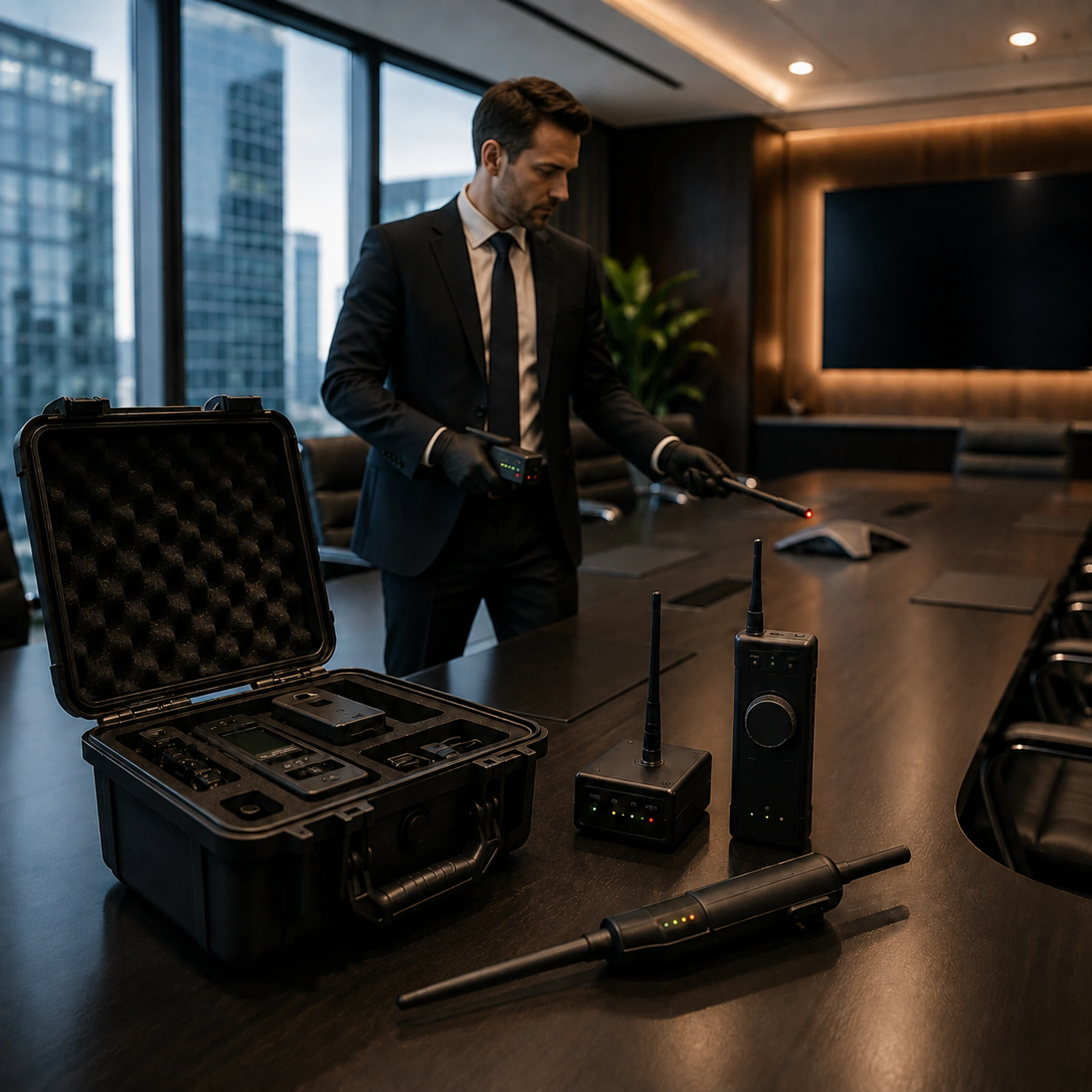
Man using bug detection devices on a conference room table with equipment case open.

Corporate Bug Sweeps

Professional inspection of offices, executive suites, conference rooms, boardrooms, workspaces, electronic equipment, and other sensitive business areas where confidential information may be discussed or stored.

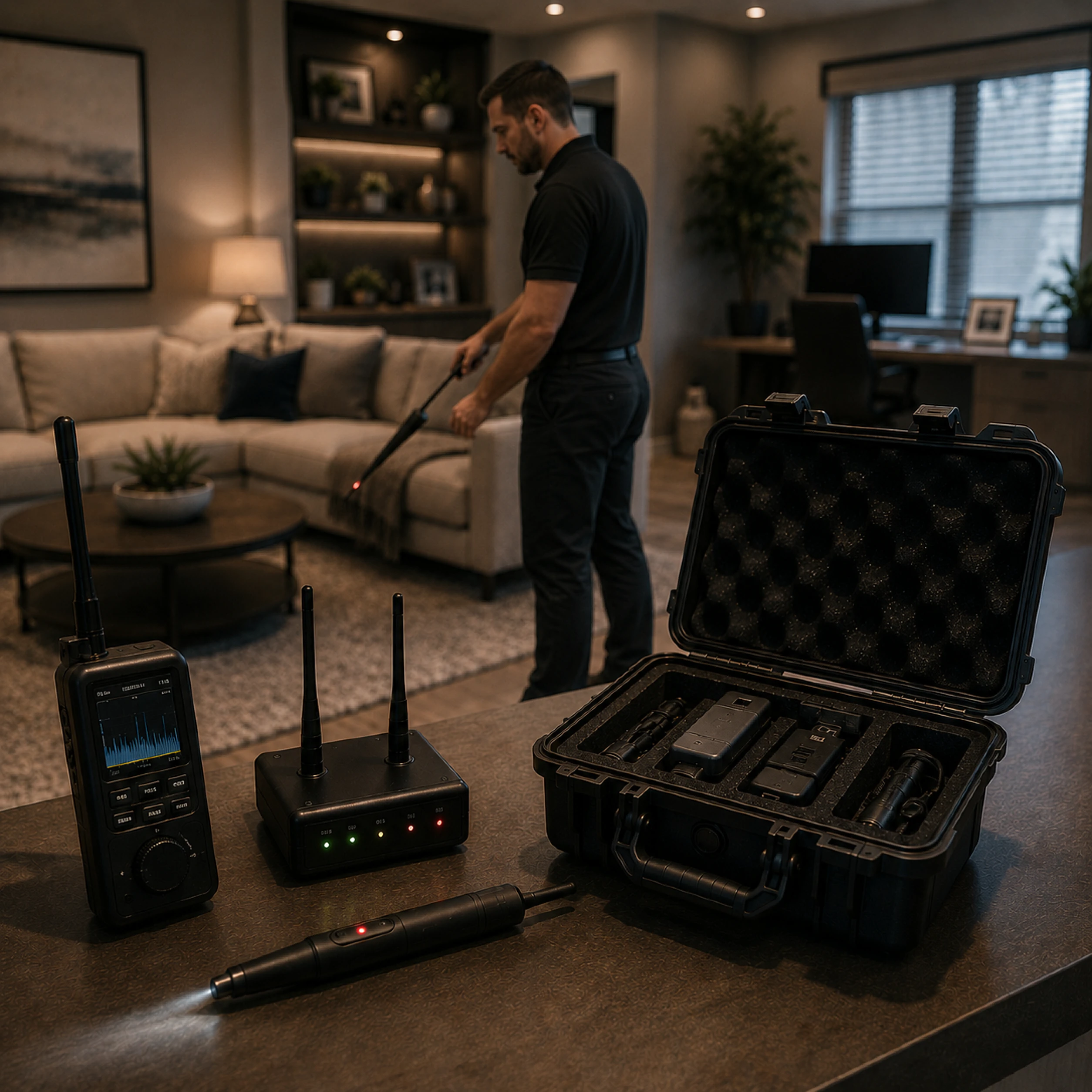
Man using bug detection device in living room with scanning equipment on table in foreground.

Residential Bug Sweeps

Inspection of homes, bedrooms, home offices, living areas, personal electronics, furniture, fixtures, and other areas where personal privacy may have been compromised.

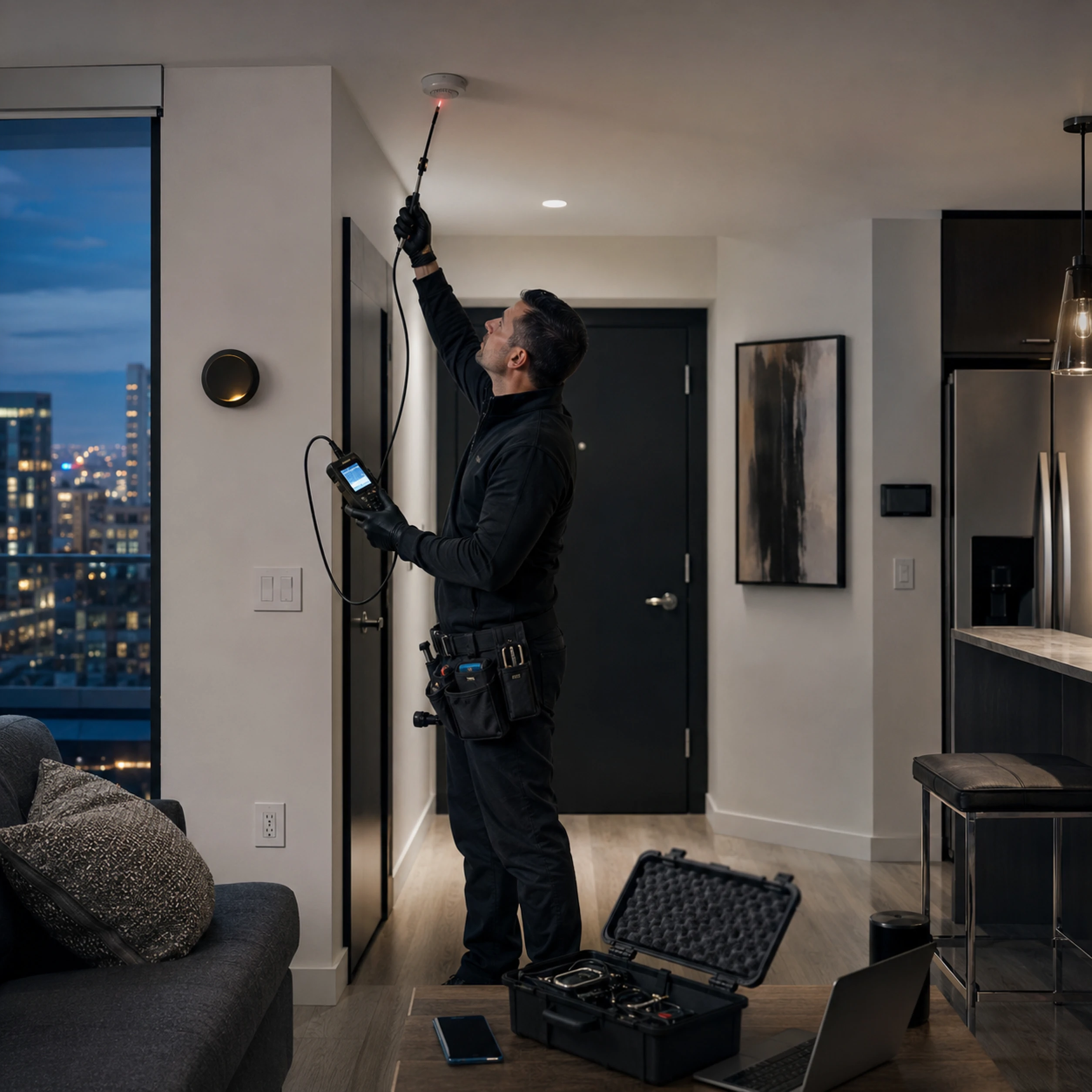
Technician using inspection device with probe near smoke detector in apartment.

Apartment Bug Sweeps

Inspection of apartments, condominiums, rental properties, shared buildings, walls, fixtures, smoke detectors, outlets, furniture, electronic devices, and other possible locations for surveillance equipment.

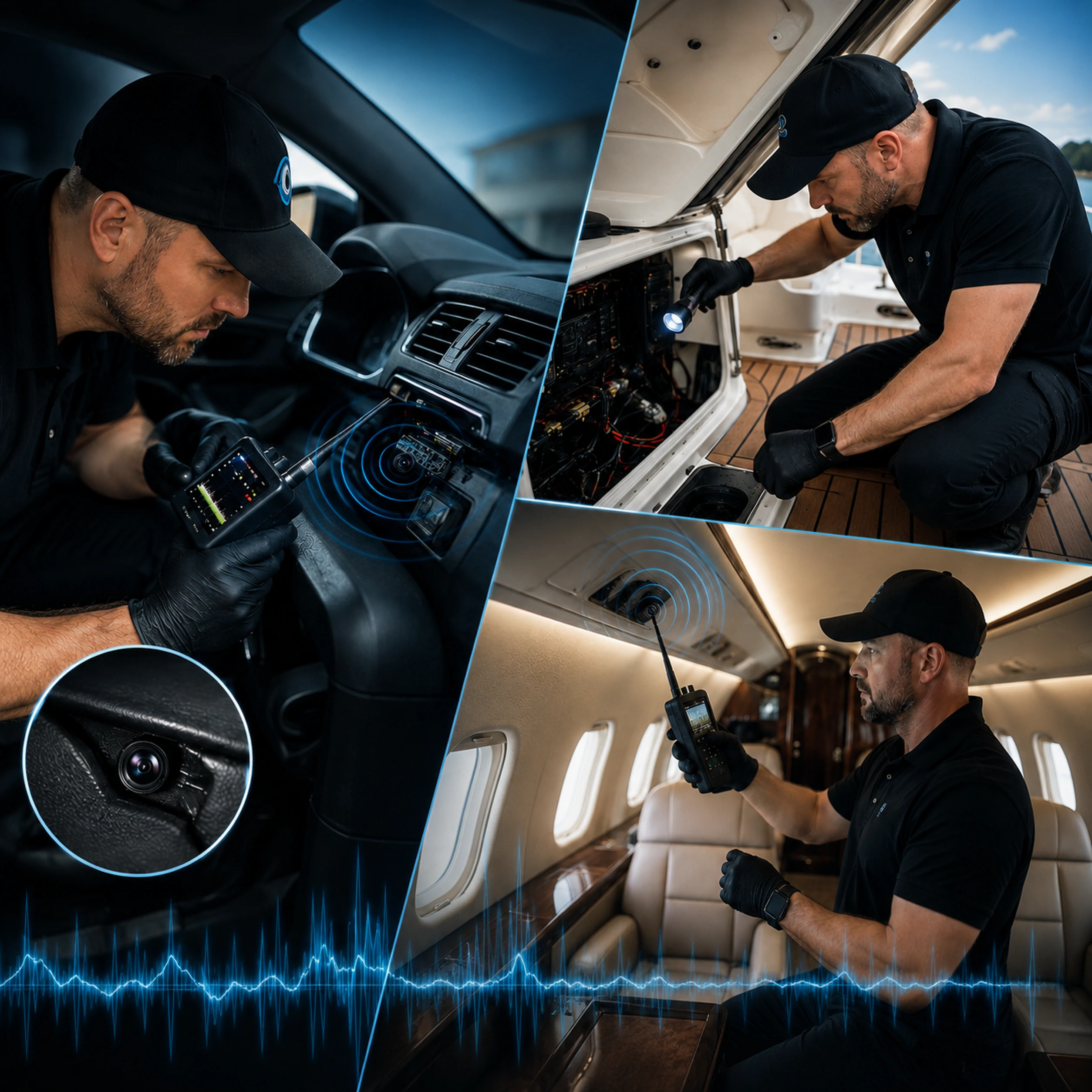
Technician inspecting hidden cameras and electronics inside a car, boat engine, and airplane cabin.

Vehicle, Boat & Plane Sweeps

Inspection for hidden tracking devices, covert audio equipment, cameras, transmitters, modified electronics, suspicious wiring, and other potential surveillance technology.

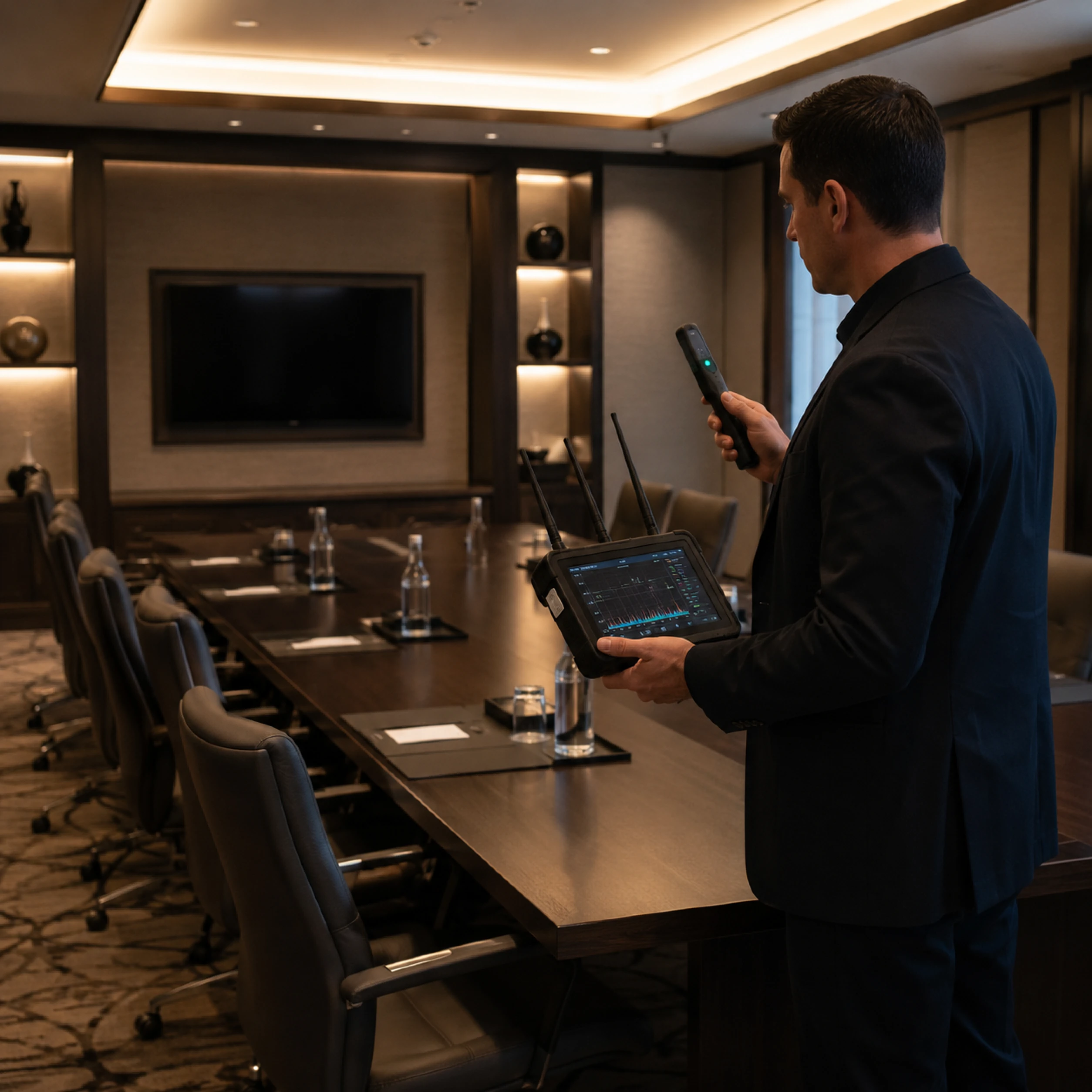
Man holding wireless device and tablet with graphs in a boardroom.

Hotel & Conference Sweeps

Inspection of hotel rooms, meeting rooms, conference spaces, temporary offices, event locations, green rooms, and other areas where sensitive conversations or business meetings take place.

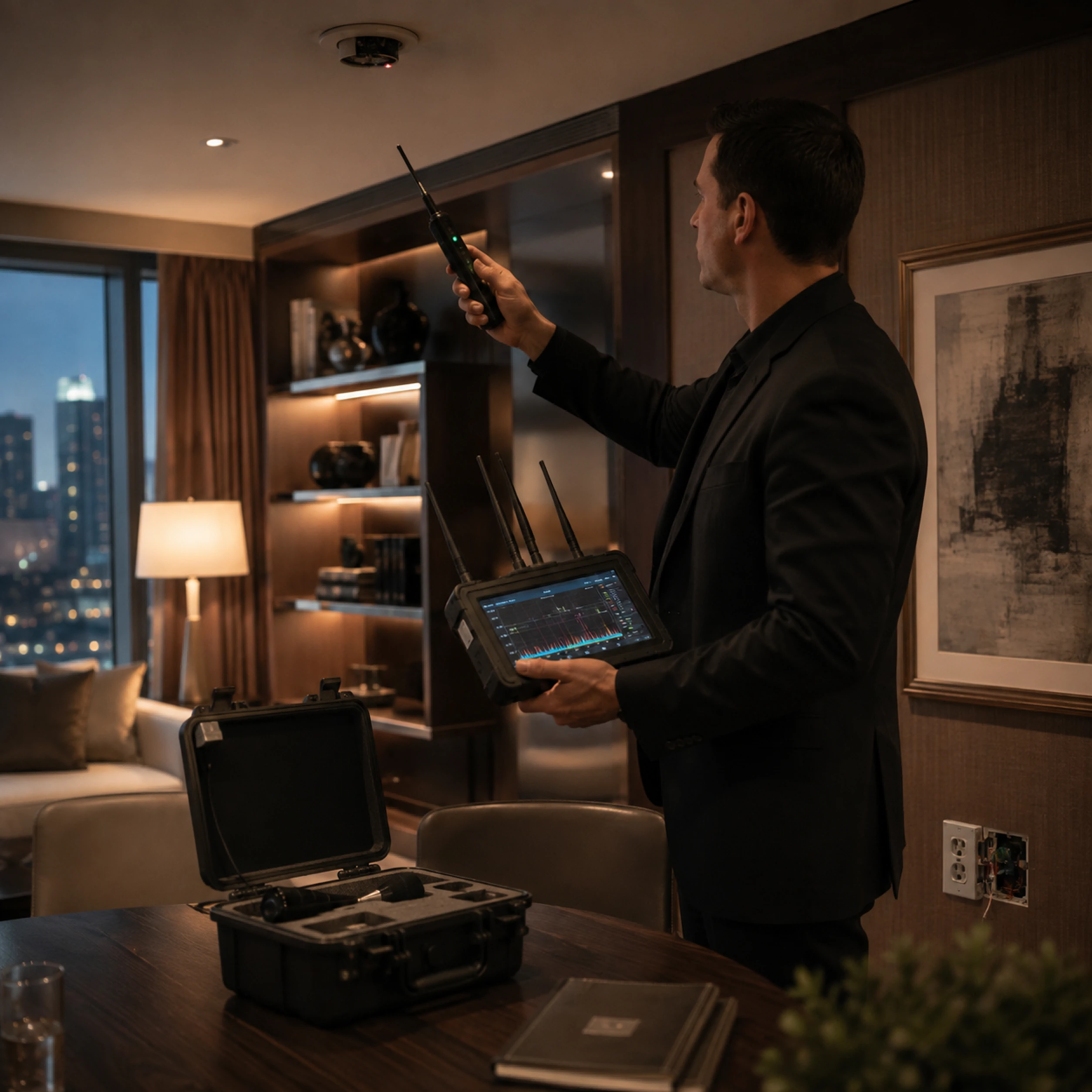
Man using electronic device with antennas to detect signals indoors at night.

Hidden Video & Audio Detection

Professional inspection for covert cameras, microphones, recorders, wireless transmitters, disguised devices, and surveillance equipment concealed inside everyday objects or structural features.

This is what we're looking for.

Hidden video cameras

Covert microphones

Audio transmitters and recorders

Wireless audio or video transmitters

GPS and vehicle tracking devices

Unauthorized RF transmitters

Devices concealed inside furniture or fixtures

Surveillance equipment that may not be actively transmitting

Modified outlets, chargers, smoke detectors, and electronics

Suspicious wiring or electronic components

Recording devices that store information locally

Our TSCM Inspection Process

Confidential Consultation

We begin by discussing the location, your concerns, relevant history, potential access points, and the scope of the inspection.

The goal is to understand the environment before the technical inspection begins.

Step 1
Step 2

Risk & Site Assessment

We evaluate the property, room, office, vehicle, boat, aircraft, or other location and determine the appropriate inspection strategy.

Different environments require different approaches.

Technical and Physical Sweep

The inspection may include RF spectrum analysis, nonlinear junction detection, thermal inspection, examination of electronics, visual and physical inspection, and inspection of concealed areas when appropriate.

We examine relevant portions of the electromagnetic spectrum for unusual, unauthorized, or potentially suspicious signal activity and use multiple detection methods because not every surveillance device operates or communicates in the same way.

We don’t rely on a single detector or a single method.

Step 3
Step 4

Findings & Documentation

Relevant findings are documented and reviewed with you.

We explain what was detected, identify anything requiring additional attention, and separate actual findings from assumptions or speculation.

Recommended Next Steps

When appropriate, recommendations may include further technical analysis, security improvements, device examination, evidence preservation, additional inspection, or consultation with qualified outside professionals.

Step 5

Professional Equipment -
Trained Expertise -
Multiple Layers of Detection

Professional TSCM work requires more than purchasing a handheld detector and walking through a room.

Modern surveillance technology can transmit wirelessly, record locally, remain dormant until activated, operate across different frequency ranges, or be concealed inside ordinary electronics, furniture, fixtures, walls, vehicles, and other objects.

That’s why an effective TSCM inspection combines trained experience, multiple detection technologies, technical analysis, and a detailed physical inspection rather than relying on a single instrument. Professional TSCM providers must match their equipment and inspection methods to the environment and potential threat being investigated.

Mind Nexus TSCM inspections are performed by Jesse Beltran, a TSCM-certified specialist, using professional counter-surveillance equipment selected to identify different types of electronic activity and concealed technology.

As part of the inspection process, we examine relevant portions of the electromagnetic spectrum for unusual, unauthorized, or potentially suspicious signal activity. We combine spectrum analysis with other detection methods because surveillance technology can operate across different frequencies, communication protocols, and transmission methods, or may not be actively transmitting at all.

Some of the Technology We Use

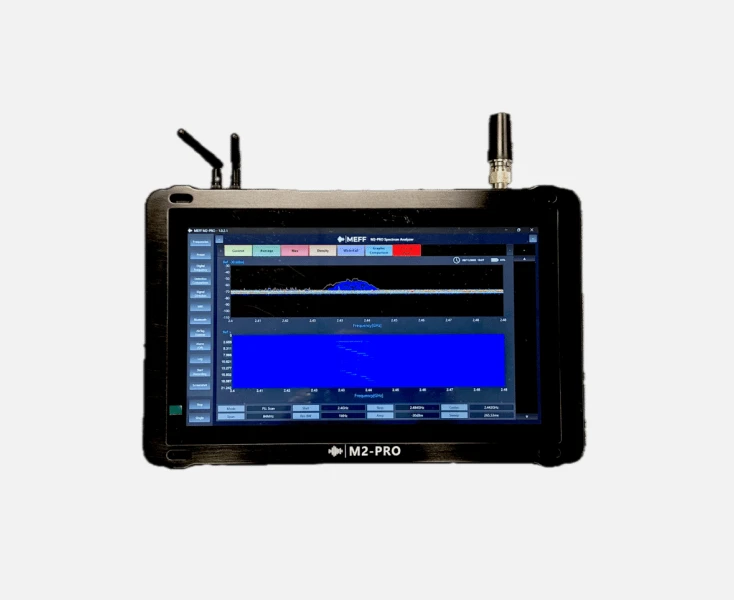
M2-PRO spectrum analyzer with antennae showing frequency and signal strength on its screen.

M2-PRO Spectrum Analyzer

The M2-PRO provides advanced RF spectrum analysis for examining the radio-frequency environment and identifying signal activity that may require further investigation.

Rather than relying only on a basic RF detector, spectrum analysis allows the operator to examine the surrounding signal environment in greater detail and investigate unusual or unauthorized transmissions.

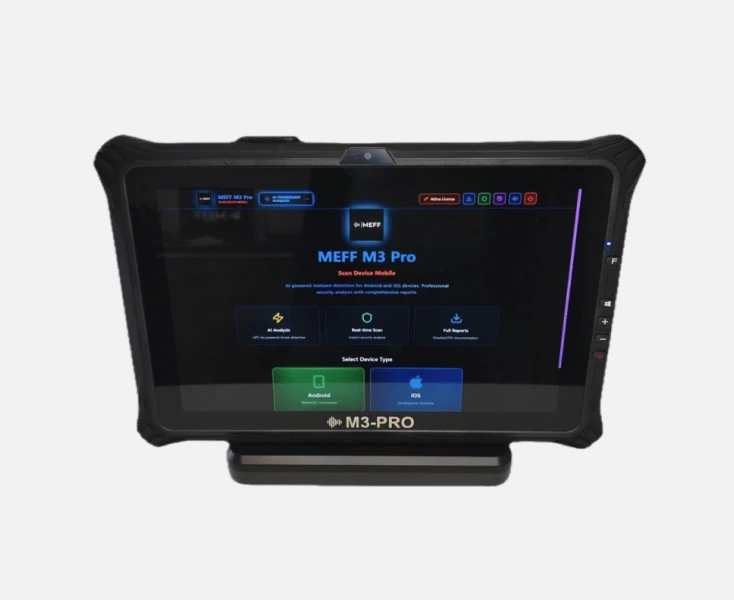
M3 Pro computer and cellphone sweeper device on stand displaying AI analysis, real-time scan, and full reports.

M3-PRO Computer & Cell Phone Sweeper

The M3-PRO adds another layer to the inspection by allowing us to examine computers and mobile devices for potential digital or electronic security concerns.

This is particularly important because modern surveillance doesn’t always involve a traditional microphone hidden behind a wall. Computers, smartphones, and other connected electronics can themselves become part of a privacy or security compromise.

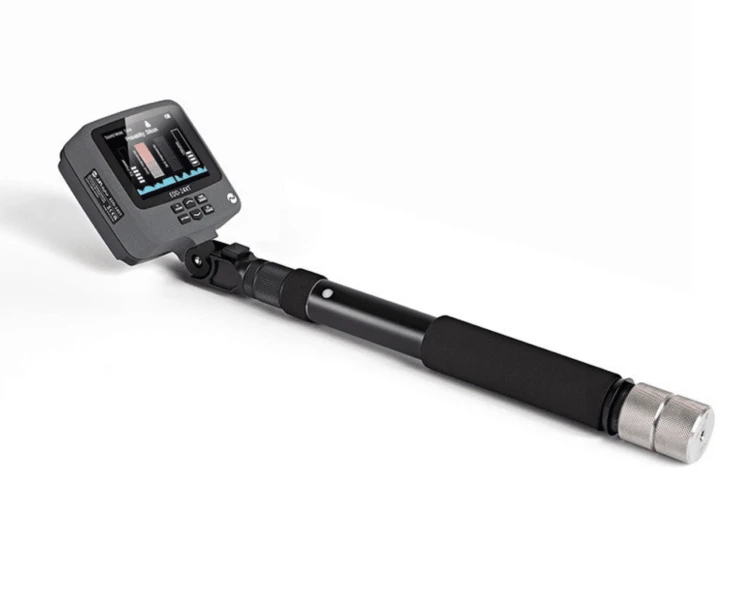
EDD-24XT Nonlinea Junction Detector device with screen and buttons attached to a black handle with a foam grip.

EDD-24XT Nonlinear Junction Detector

A Nonlinear Junction Detector, or NLJD, is designed to locate semiconductor-based electronics whether the device is actively transmitting or not.

NLJD technology can help identify electronic components concealed inside walls, ceilings, furniture, fixtures, containers, electronics, and other areas that may not be discovered through RF detection alone.

This is an important distinction because some surveillance devices may record locally, transmit intermittently, remain in standby mode, or be completely powered off during an inspection.

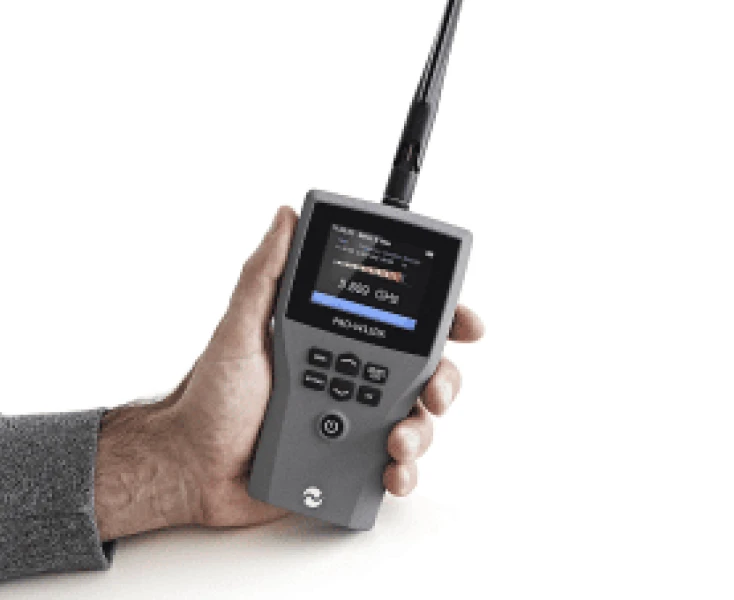
Hand holding a gray handheld RF signal detector.

RF Detection and Signal Analysis

Professional RF detection equipment is used to examine the environment for wireless activity associated with technologies such as cellular devices, Wi-Fi, Bluetooth, wireless cameras, tracking equipment, listening devices, and other transmitting electronics.

Modern TSCM equipment can evaluate multiple portions of the RF spectrum because surveillance devices may operate across very different technologies and frequency ranges. The professional equipment described in the reference material includes tools capable of detecting cellular, Wi-Fi, Bluetooth, GPS tracking, covert wireless cameras, and other RF activity.

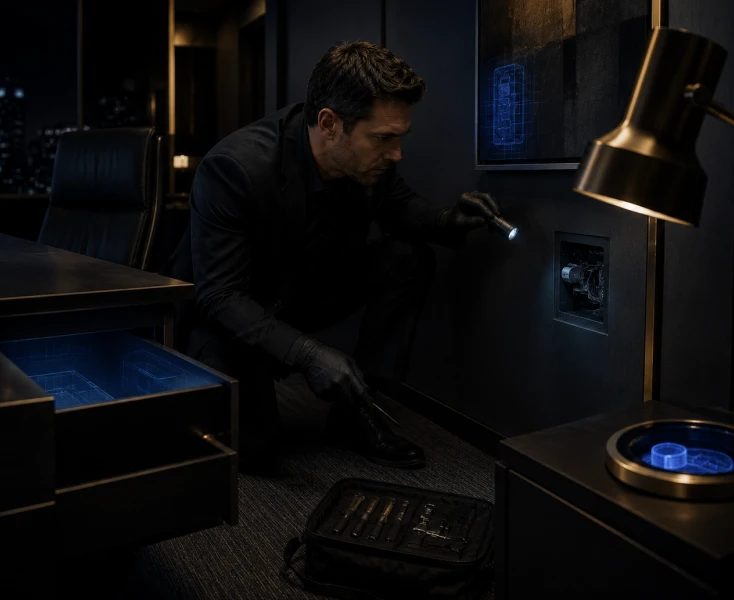
Man inspecting a wall fuse box with a flashlight in a dimly lit room.

Physical and Concealed-Area Inspection

Technology is only part of a professional sweep.

The inspection may also include detailed examination of:
Walls and ceilings, electrical outlets and switches, smoke detectors, chargers and power adapters, furniture and fixtures, electronic equipment, wiring, vehicles, difficult-to-access areas, and objects that appear modified or out of place.

When appropriate, additional inspection tools may be used to examine concealed or difficult-to-reach locations.

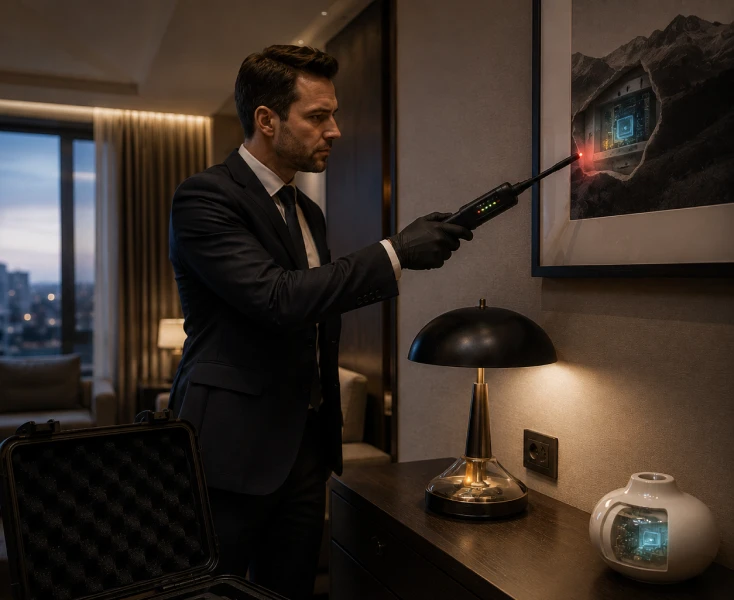
Man using an electronic device to scan a framed picture on a wall

Non-Transmitting Electronics Detection

One of the limitations of relying exclusively on RF detection is simple:
Not every electronic surveillance device is transmitting when you look for it.
Some devices store information internally. Others transmit only periodically. Some may be switched off entirely.

Nonlinear junction detection provides an additional method for locating electronic circuitry regardless of whether the device is actively radiating a signal.

Why Multiple Detection Methods Matter

There is no single device capable of identifying every possible surveillance threat.

A transmitter may be visible through RF analysis but invisible to another detector.

A dormant electronic device may produce no RF transmission at all.

A hidden camera may require optical or physical inspection.

A compromised computer or smartphone may require an entirely different type of analysis. That’s why professional TSCM work uses layers of detection.

RF Spectrum Analysis

Nonlinear Junction Detection

Computer & Mobile Inspection

Physical Examination

Technical Analysis

Documentation

TSCM-Certified Experience

Equipment is only as effective as the person operating it.
Jesse Beltran performs Mind Nexus TSCM inspections and has completed professional Technical Surveillance Countermeasures certification and training.

Training matters because professional counter-surveillance work requires more than recognizing a signal on a screen. The operator must understand the environment, distinguish normal electronic activity from something requiring investigation, use multiple technologies correctly, physically inspect the location, and document relevant findings.
The equipment, experience, and inspection process work together.

We don’t rely on one detector.
We don’t assume every signal is surveillance.
We investigate what the equipment and physical inspection actually reveal.

Certificate awarded to Jesse Beltran for Level 4 TSCM Practitioner dated January 22, 2026 from COMSEC LLC.

Your Privacy Is Not Only What We Investigate. It’s How We Operate.

Privacy is at the center of every TSCM investigation.

When someone contacts us about a possible surveillance concern, we understand that the situation may involve sensitive personal matters, confidential business information, legal concerns, private relationships, executive communications, or information that could create serious consequences if exposed.

That’s why discretion begins with the first conversation.

Your inquiry, appointment details, location, concerns, findings, photographs, reports, and client information are handled confidentially. We do not treat your situation casually, and we do not share details of an inspection with outside parties without your permission unless legally required to do so.

Whenever possible, scheduling and on-site work are handled in a way that minimizes attention and protects your privacy. We understand that simply having a technical surveillance inspection performed may itself be sensitive.

Whether we’re inspecting a home, office, hotel room, conference space, vehicle, boat, or aircraft, the goal is to conduct the work professionally, quietly, and with respect for the confidentiality of everyone involved.

Your privacy is not only what we investigate. It’s how we operate.

Who These Services Are For

Business owners and corporations
Executives and public figures
Attorneys and legal teams
Property owners and tenants
Couples and families
Conference and event organizers
People involved in sensitive business, legal, or personal situations
Hotels and hospitality professionals
Why Choose Mind Nexus

A Professional Process Focused on Evidence

When privacy, security, and sensitive information are at stake, the process matters.

Mind Nexus takes a structured, evidence-focused approach to Technical Surveillance Countermeasures.

Every inspection is conducted by a TSCM-certified specialist using professional detection equipment and a thorough inspection process designed to identify and document possible electronic surveillance threats.

We don’t begin with assumptions, theories, or predetermined conclusions.

We follow the evidence.

TSCM-Certified Expertise

Inspections are performed by a trained specialist with Technical Surveillance Countermeasures experience.

Professional Detection Equipment

We use specialized equipment designed for RF analysis, nonlinear junction detection, physical inspection, and other appropriate counter-surveillance methods.

Thorough Inspection Process

We don’t simply walk through a location with one detector.
The process may involve technical analysis, physical examination, electronics inspection, RF analysis, concealed-area inspection, and additional methods appropriate to the environment.

Clear Documentation

Relevant findings are documented so you understand what was detected, what was examined, and what may require further attention.

Confidential Communication

Your information and findings are handled discreetly throughout the process.

No Assumptions or Predetermined
Conclusions

We don’t force a conclusion to fit a concern.
Something suspicious isn’t automatically surveillance equipment simply because it looks unusual, and an unexpected signal isn’t automatically evidence of wrongdoing.
The inspection is guided by what the equipment and physical examination actually reveal.

Evidence-Focused Findings

Our goal is to help separate suspicion from what can actually be detected, examined, and documented.
When something as important as your privacy is on the line, you need more than guesswork. You need a professional process focused on evidence.

Frequently Asked Questions

Here are some of the details clients ask about most often, from appointment length to travel requirements.

What is a TSCM bug sweep?

A Technical Surveillance Countermeasures, or TSCM, sweep is a professional inspection designed to identify possible electronic surveillance threats.

This may include hidden cameras, covert microphones, unauthorized transmitters, tracking devices, modified electronics, concealed recording equipment, and other technology that could compromise privacy or confidential information.

The process combines specialized detection equipment, technical analysis, and a detailed physical inspection of the property, room, vehicle, or environment.

How long does an inspection take?

The time required depends on the size of the location, number of rooms or vehicles, complexity of the environment, and specific concerns involved.

A smaller residential or vehicle inspection may take several hours, while larger homes, offices, corporate facilities, conference spaces, boats, or aircraft may require additional time.

We’ll discuss the estimated timeframe before the appointment.

Can you inspect a vehicle, boat, or plane?

Yes.

We provide TSCM inspections for cars, trucks, recreational vehicles, boats, and private aircraft.

The inspection may include passenger compartments, storage areas, electronics, wiring, exterior access points, and other locations where tracking or surveillance equipment could potentially be concealed.

The exact scope depends on the vehicle and circumstances.

Do surveillance devices need to be transmitting to be detected?

Not always.

Active transmitters may be identified through radio-frequency analysis, while nonlinear junction detection and physical inspection may help locate electronic components that aren’t currently transmitting.

Some devices may record information locally, transmit only periodically, or remain inactive until activated.

That’s why a professional inspection shouldn’t rely on one detection method.

Will I receive documentation of the findings?

Yes.

Relevant findings can be documented and reviewed with you following the inspection.

Documentation may include areas inspected, equipment used, suspicious items or signals identified, photographs when appropriate, and recommendations for possible next steps.

The exact format and level of documentation depend on the scope of the service and what is found.

Do I need to leave the property during the inspection?

That depends on the location and circumstances.

In some cases, we may ask that certain areas remain unoccupied to reduce unnecessary electronic interference or interruption.

Any preparation requirements will be discussed before the appointment.

It’s also important that the inspection not be openly discussed with anyone who may have access to the location before the sweep has been completed.

Is the service confidential?

Yes.

Confidentiality and discretion are central to the entire TSCM process.

Your inquiry, location, appointment details, concerns, findings, and personal or business information are handled privately.

What areas do you serve?

Service availability depends on the location, scope of the inspection, and travel requirements.

Contact us with your city, state, type of property or vehicle, and the service required.

We’ll let you know whether we can accommodate the location and whether travel-related costs apply.

How much does a TSCM inspection cost?

Pricing depends on several factors, including:

  • Type and size of the property
  • Number of rooms or vehicles
  • Location and travel requirements
  • Complexity of the environment
  • Scope of the inspection
  • Equipment and time required
  • Level of documentation requested

Because every situation is different, TSCM services are quoted individually following an initial confidential consultation.

Contact us with the basic details of your situation to request a quote.

You Can’t Protect Your Privacy Until You Know What’s There

When you’re concerned that your home, office, vehicle, hotel room, conference space, or other private environment may be compromised, uncertainty can make the situation even more difficult.

A professional TSCM inspection gives you a structured way to investigate possible hidden cameras, covert microphones, tracking devices, unauthorized transmitters, modified electronics, and other surveillance threats that may be exposing your conversations, movements, business information, or personal activity.

Whether the concern involves corporate espionage, a privacy violation, a sensitive meeting, a residential property, or a vehicle, the first step is finding out what can actually be detected and documented.

Don’t rely on assumptions, consumer-grade detectors, or guesswork when your privacy, security, reputation, or confidential information may be at risk.

Contact us to discuss your concerns, the location you need inspected, and the appropriate next step.

Request a Confidential TSCM Consultation

TSCM Inquiry Form

Your inquiry, contact information, location, and the details you provide are handled confidentially.
Thank you! Your submission has been received!
Oops! Something went wrong while submitting the form.